Towards an Enduring Future: Building Trust with Community Health Workers
Find More Posts


March 24, 2026
A community health worker and residents stand at the entry of a patient’s home. The patient is a 62-year old woman, who lives alone and has been experiencing paralysis on the right side of her body.
“How are you doing today, ma’am?” the resident asks.
“I’ve been better. Having some difficulty getting out of the house to grocery shop,” she replies.
Looking at the both the patient and resident, the community health worker says, “I’m sorry to hear that. Let’s see what we can do to help.”
The resident chimes in, “I can reach out to Meals on Wheels and set up a food service for her.”
“That would be a great help,” the patient affirms.
This scene is based on a story shared by the team at UT Health San Antonio about a home visit, a crucial part of the health equity curriculum supported by the Building Trust: Advancing Health Equity grant program and taught by Dr. Jason Morrow and Dr. Elena Jiménez Gutiérrez.
Home visits are just one of the teaching tools integrated into Promotores and Residents in Internal Medicine for Equity (PRIME): A Collaborative Health Equity Curriculum. Through PRIME, promotores (community health workers) teach residents how to connect health equity with community building to reach vulnerable patient populations.
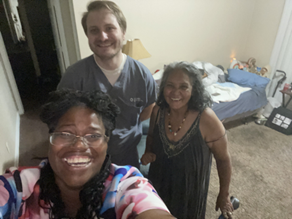 Drs. Morrow and Jiménez Gutiérrez shared that the program seeks to train “clinicians who effectively demonstrate health literacy techniques, cultural humility, and trauma-informed care in encounters with community health workers, patients, their families, and other community members.”
PRIME operates partly through promotor-resident dyads, who meet consistently and engage together in activities such as leading health literacy sessions at community centers and conducting home visits across San Antonio.
Residents have participated in over 300 home visit sessions and nine community events. The team has graduated six residents from this residency track and there are currently seven residents enrolled in the program. The PRIME team also collaborates with Street Medicine San Antonio to pair residents with other health professionals, social workers, and a highly trusted harm reduction agency that serves individuals experiencing homelessness.
A key lesson of PRIME is that trust develops over the long term. Rather than brief encounters, the program emphasizes continued engagement with medically underserved populations. These ongoing relationships teach residents that trust is built gradually through persistence and consistency.
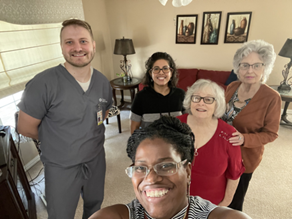 “I have been able to witness some of the ways that our healthcare system falls short of those it serves and dialogue with community leaders who are actively working to overcome these gaps,” said Dr. Rebekah Muenich, the first resident to graduate from the PRIME program. “These are experiences I could not have had if my training had been confined to the hospital/clinic, and I believe they will deeply impact my future career.”
PRIME also centers the expertise of community health workers. Research has found that they bring invaluable expertise about the communities they serve and can help physicians better understand the culture, barriers to care, and strategies for harm reduction.
Developing trust through community involvement is a complicated process. PRIME points to a powerful and often under-utilized solution: community health workers. Partnership by partnership, the program is transforming care today and building toward an enduring future.